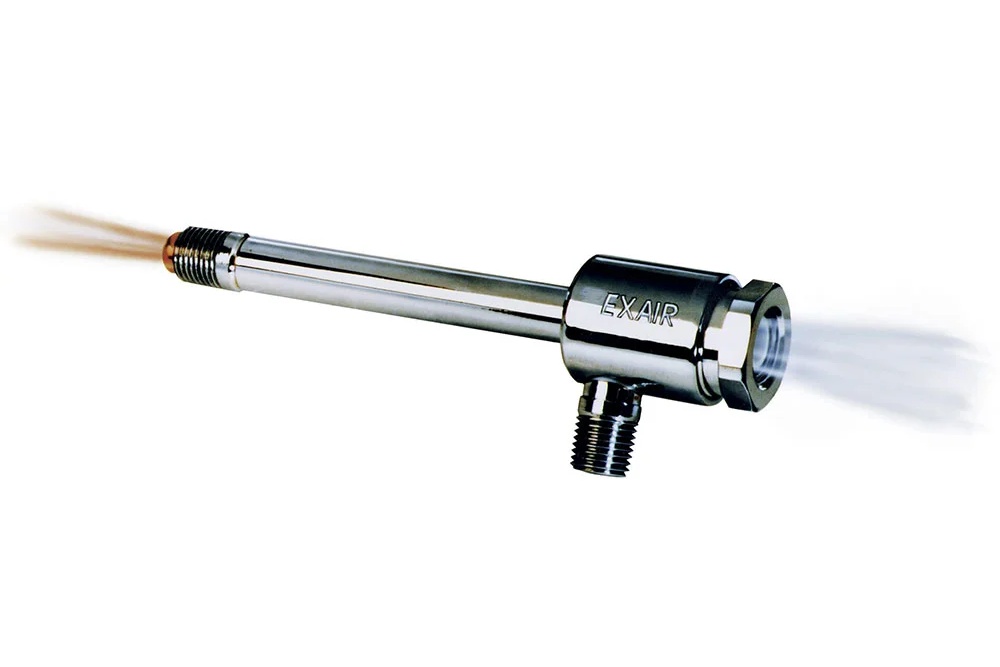
Pneumatic conveying systems moving abrasive materials experience predictable wear patterns. Fine mineral powders, crushed glass, steel shot, ceramic dust, and filled plastic compounds erode internal surfaces through constant high-velocity impact. Standard hardened steel components show measurable wear within weeks of continuous operation. As internal geometry changes from erosion, airflow efficiency drops, compressed air consumption increases, and conveying capacity decreases.
Facilities replace worn conveying units at intervals determined by material abrasiveness and operating hours. Each replacement involves production downtime, component costs, and labor for installation. For operations running multiple conveying lines or handling particularly aggressive materials, these replacement cycles create recurring maintenance expenses and scheduling disruptions.
How Abrasive Materials Damage Pneumatic Conveying Systems
Pneumatic line vacs use compressed air to create vacuum force that pulls material through tubing. As air accelerates through the internal generator, it reaches velocities that transport solids efficiently. When abrasive materials enter this high-velocity airstream, individual particles repeatedly strike internal surfaces at the generator bore and critical flow areas.
Materials vary significantly in abrasive potential. Silica sand, alumina, garnet, and crushed stone rank among the most aggressive due to their hardness and angular particle shapes. Steel grit and iron shot create impact wear through repeated bombardment. Glass cullet, ceramic powders, and mineral-filled plastic compounds combine hardness with sharp edges that accelerate erosion.
Traditional hardened alloy components resist abrasion better than standard steel but still experience gradual wear. Erosion typically begins at the generator area where air velocity peaks and particle impact is most concentrated. As the internal bore enlarges even slightly, airflow patterns shift. Conveying efficiency declines, operators increase air pressure to maintain throughput, and compressed air consumption rises.
Industries handling these materials daily—mining operations, foundries, metalworking facilities, recycling plants, plastics manufacturing, and ceramic processing—recognize abrasion as an operational constant requiring equipment designed specifically for these conditions.
Ceramic Insert Technology for Extreme Abrasion Resistance
Ceramic materials offer substantially higher abrasion resistance than hardened metals. Industrial ceramics maintain surface integrity under conditions that erode steel components rapidly. By incorporating ceramic inserts at high-wear zones inside line vac generators, manufacturers reinforce the areas experiencing the most severe particle impact.
This targeted protection approach positions ceramic material precisely where abrasion occurs most intensely. The generator bore and critical flow surfaces receive ceramic reinforcement while the overall unit structure remains metal for durability and mounting flexibility. Compressed air flows through the ceramic-lined passages, directing abrasive particles against surfaces engineered to withstand continuous friction.
Conveying performance remains comparable to heavy-duty alloy designs. The system generates equivalent vacuum force and material flow rates. Airflow characteristics stay consistent. The critical difference appears in service life, ceramic-enhanced units operate substantially longer before erosion affects performance.
Performance Comparison: Ceramic vs. Standard Hardened Alloy
Standard hardened alloy line vacs provide adequate service life when conveying mildly abrasive materials or operating intermittently. For operations requiring a more robust solution, the Line Vac (Heavy Duty) is specifically engineered to handle demanding abrasive applications.
Facilities conveying silica sand, alumina, or steel shot report ceramic units maintaining performance where standard alloy units required replacement. The extended service intervals reduce both direct replacement costs and indirect costs from production interruptions. Maintenance schedules become more predictable when equipment degradation rates decrease.
Compressed air consumption remains stable throughout the ceramic unit’s service life because internal geometry maintains its original dimensions longer. Standard units experiencing erosion require increasing air pressure to maintain conveying rates as internal clearances enlarge, raising operating costs before replacement becomes necessary.

Applications Requiring Enhanced Abrasion Protection
Certain materials and industries benefit immediately from ceramic-enhanced conveying systems:
Mining and mineral processing: Silica sand, alumina, crushed stone, and mineral concentrates create aggressive wear conditions during transfer and sampling operations.
Foundry operations: Steel shot, grit blasting media, and sand handling systems face continuous abrasive exposure. Ceramic protection extends equipment life in these demanding environments.
Metalworking: Steel chips, iron filings, and grinding swarf combine sharp edges with hardness. Recycling operations handling shredded metals experience similar conditions.
Glass and ceramics: Crushed glass cullet and ceramic powders maintain sharp particle edges throughout processing. Fine ceramic dust remains highly abrasive even at small particle sizes.
Plastics manufacturing: Compounds containing glass fiber reinforcement or mineral fillers (calcium carbonate, talc, silica) create unexpected abrasion during material transfer.
Recycling facilities: Mixed material streams containing glass, metals, minerals, and embedded contaminants create unpredictable wear patterns requiring robust equipment.
Sizing and Configuration for Abrasive Applications
Line vac systems are available in multiple diameters to match different material flow requirements. Proper sizing balances conveying capacity against compressed air consumption. Undersized units operate at maximum capacity continuously, accelerating wear even with ceramic protection. Oversized units consume excess compressed air without improving material transfer rates.
Material characteristics influence sizing decisions. Fine powders require different airflow patterns than coarse particles. Dense materials like steel shot demand higher conveying forces than lighter ceramic dust. Conveying distance affects performance—longer runs require more air velocity to maintain material suspension.
Compressed air supply pressure affects conveying force directly. Most line vac systems operate efficiently at 5.5-6.9 bar supply pressure. Adequate air volume is equally important—insufficient supply volume causes performance drops regardless of pressure.
Installation and Maintenance Considerations
Ceramic-enhanced line vac systems integrate into existing compressed air infrastructure similarly to standard units. Installation requires compressed air connection, material inlet tubing, and discharge line routing. Mounting brackets position units appropriately for material entry angles and discharge accessibility.
Air filtration before the line vac protects internal surfaces from moisture and oil contamination that could affect performance. Pressure regulators enable fine-tuning of operating pressure for specific materials and conveying distances.
Maintenance requirements remain minimal. Ceramic inserts do not require replacement under normal operating conditions. Periodic inspection verifies proper air supply quality and checks external connections. Unlike mechanical conveyors with moving parts, belts, or motors, pneumatic systems have no wear components requiring scheduled replacement beyond the unit itself when erosion eventually occurs.
Evaluating When Ceramic Protection Is Necessary
Standard hardened alloy line vacs suit applications involving:
- Mildly abrasive or non-abrasive materials
- Intermittent operation with limited total operating hours
- Materials like plastic pellets, food products, or soft granules
Ceramic insert technology becomes cost-effective for:
- Continuous operation with highly abrasive materials
- Materials classified as hard or angular (silica, alumina, steel, glass)
- High-volume operations where replacement downtime is costly
- Facilities seeking to reduce maintenance frequency and replacement inventory
The decision depends on material characteristics, operating schedule, and total cost of ownership including replacement frequency and downtime expenses.